
A clear breakdown of each SACAP work stage—from inception to close-out—so you know exactly what happens, when it happens, and what you should expect at every step.
What Are the SACAP Work Stages?
SACAP—the South African Council for the Architectural Profession—defines six standard work stages that structure how architectural services are delivered. These stages apply to every project, from a small home extension to a multi-storey commercial building.
The stages are Inception, Concept and Viability, Design Development, Documentation and Procurement, Construction, and Close-out. Fees are tied to these stages. Deliverables are tied to these stages. If you understand the stages, you understand where your project is and what should be happening next.
Stage 1: Inception
This is where everything begins—and where most of the important decisions get made.
During inception, the architect gathers information. Your brief. Your budget. Your site. Your timeline. They assess what is possible and what is not. They identify which consultants are needed—engineers, land surveyors, quantity surveyors. They review property rights, zoning, and any constraints that could affect what you can build.
The outcome of this stage is clarity. A defined brief. A realistic budget range. A project programme. And a decision on whether to proceed.
Skip this stage or rush through it and you pay for it later—in redesigns, cost overruns, and surprises that should have been caught upfront.
Stage 2: Concept and Viability
This is where ideas take shape.
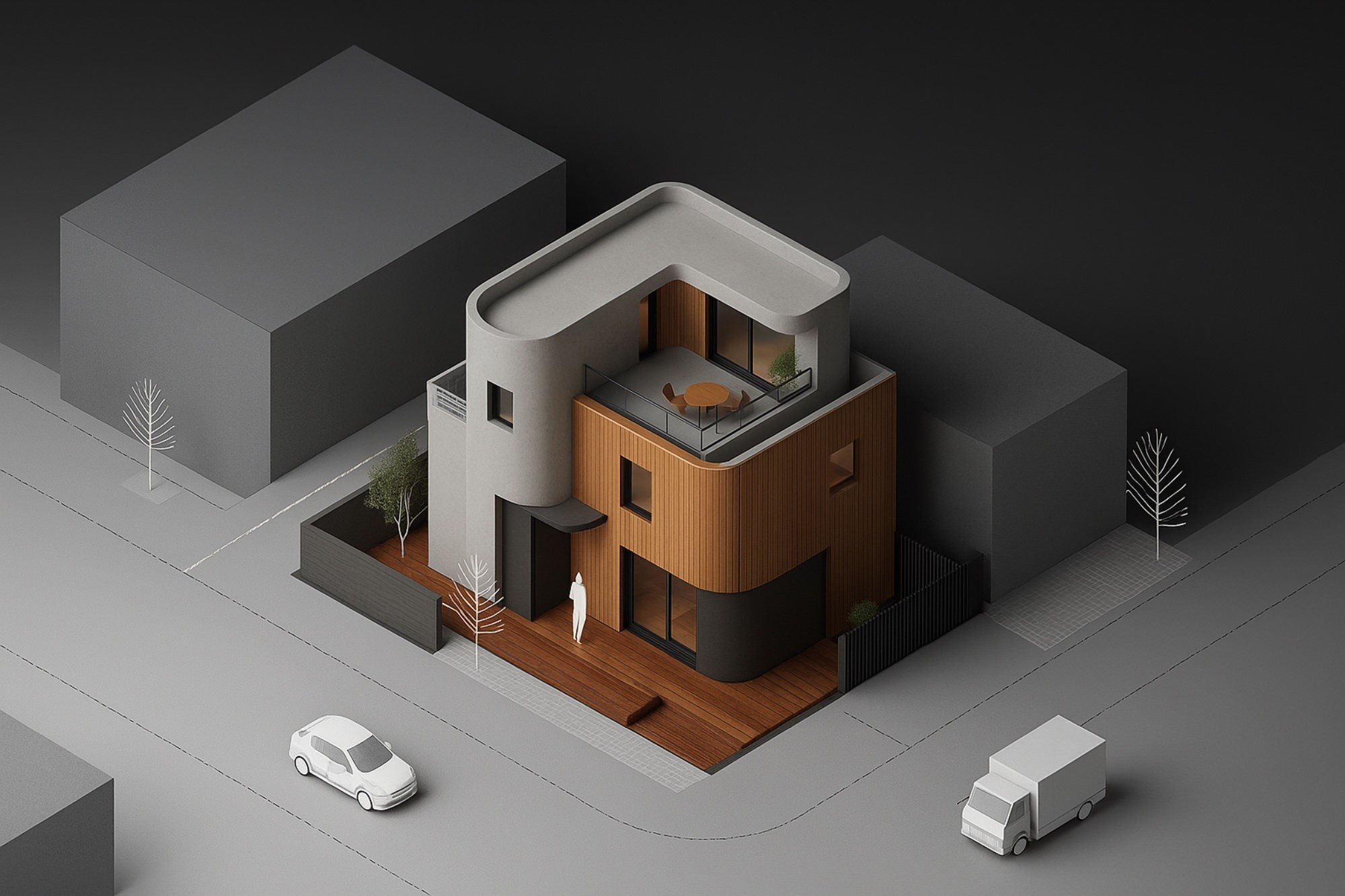
The architect develops the initial design concept. Floor plans. Spatial relationships. The overall form and character of the building. They test the concept against your brief, the site, and the budget. They check that what is being proposed can actually be approved and built within your constraints.
At the end of this stage, you should have a clear picture of what the building will be. Not every detail—but the big moves. The layout. The massing. The relationship between inside and outside. Enough to know whether this is the direction you want to commit to.
This is also the last stage where major changes are easy. Once you move past concept, changes start costing real time and money.
Stage 3: Design Development
Now the concept gets refined into something buildable.
The architect develops the design in detail. Construction systems are chosen. Materials are specified. Engineering requirements are integrated. The building starts to become a set of coordinated decisions rather than a sketch.
This stage involves intense coordination with other consultants—structural engineers, electrical engineers, mechanical engineers. Everyone needs to be working from the same information. Clashes between systems get resolved on paper, not on site.
By the end of design development, the project should be fully resolved. No major unknowns. No gaps in the design. What remains is documentation.
Stage 4: Documentation and Procurement
This stage has two parts. First, the drawings and specifications needed for municipal approval. Second, the documents needed to get the building priced and built.
Council documentation includes everything required to submit for building plan approval—architectural drawings, engineering drawings, SANS compliance reports, and any additional submissions required by fire, health, or environmental departments. Once approved, you have legal permission to build.
Construction documentation goes further. Detailed drawings. Specifications. Schedules. Enough information that a contractor can price the work accurately and build it without guessing. The architect then manages the tender process—issuing documents, answering queries, evaluating submissions, and recommending a contractor.
This stage ends with a signed building contract. The project moves from design into construction.
Stage 5: Construction
Now it gets built.
The architect's role during construction depends on the scope of their appointment. At minimum, they should be available to answer queries and review contractor submissions. With full services, they act as Principal Agent—administering the contract, conducting site inspections, certifying payments, managing variations, and ensuring the work matches the documentation.
Construction is where the quality of everything that came before gets tested. Good documentation means fewer queries, fewer disputes, fewer surprises. Poor documentation means constant rework, cost creep, and a build that drifts from what you approved.
This stage ends when the building is practically complete—finished to the point where it can be occupied and used for its intended purpose.
Stage 6: Close-out
The project is not over when you move in.
Close-out covers the final steps. Snagging—identifying and correcting defects. Final inspections. Issuing the practical completion certificate. Handing over documentation, warranties, and as-built drawings. And managing the defects liability period, during which the contractor remains responsible for fixing any issues that emerge.
This stage also includes the final account. All costs are reconciled. Final payments are certified. The contract is formally concluded.
Close-out is often rushed or ignored. That is a mistake. A properly closed-out project protects you legally and ensures you have everything you need to maintain and modify the building in the future.
Why Understanding the Stages Matters
Every stage has a purpose. Every stage has a cost. And every stage builds on the one before it.
Clients who understand this make better decisions. They know when to push for changes and when it is too late. They know what questions to ask and what answers to expect. They know why things take time—and when delays are avoidable.
An architect who walks you through these stages clearly is an architect who wants you to be informed. That is the kind of professional relationship that leads to a good project.